Join us for a lecture, lunch, and roundtable discussion on Security and Stability in Contemporary US-East Asian Relations. This event is sponsored by the East Asian Studies Center, the Japan Forum on International Relations and the Mershon Center for International Security Studies.
Register
The Weaponization of Interdependence: Korea’s De-Risking between the US and China.
11:00-12:15
Abstract: In recent years, China and the United States have each turned economic interdependence into an instrument of coercion, using their dominant positions in international trade to push states and firms to comply with their political goals. What is distinctive about this form of economic pressure, and how can other countries fight back? In Victor Cha's new book, China's Weaponization of Trade, he and his co-authors explore how China exercises economic power through a wealth of new and original data on China’s economic statecraft over the past three decades. They collected more than 600 cases of China’s economic bullying of states, companies, and individuals in North America, Asia, and Europe. To deter China's economic bullying, they propose a multilateral strategy of “collective resilience” to counter intimidation, showing how targeted states can band together, leverage trading relationships, and threaten retaliation.
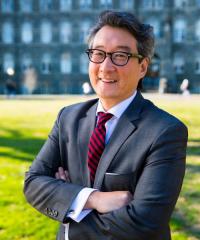
Bio: Victor Cha is president of the Geopolitics and Foreign Policy Department and Korea chair at the Center for Strategic and International Studies (CSIS). He is also a distinguished university professor and professor of government at Georgetown University. From 2021 to 2025, he served on the Defense Policy Board in an advisory role to the secretary of defense, and prior to that, he served on the National Security Council (NSC), where he was responsible for Japan, Korea, Australia, New Zealand, and Pacific Island nations. Dr. Cha was the U.S. deputy head of delegation at the Six Party Talks and received two outstanding service commendations during his tenure at the NSC. He is the author of nine books, including the award-winning Alignment Despite Antagonism: The United States–Korea–Japan Security Triangle (Stanford University Press, 1999), which won the 2000 Ohira Book Prize, and The Impossible State: North Korea, Past and Future (Ecco, 2012), selected by Foreign Affairs as a “Best Book on the Asia-Pacific for 2012.” Dr. Cha is a two-time Fulbright scholar and a former Olin fellow at Harvard University, as well as a former Hoover, Stanford Center for International Security and Cooperation, and Koret fellow at Stanford University.
Lunch (must RSVP by March 23)
12:15-1:15 (in the Rotunda)
The US and Japan in the Present and Future: A Roundtable Discussion
1:30–3:00
Abstract: This roundtable brings together Japanese and American experts to discuss how the two countries can deepen cooperation in non-military domains—including trade and economic security, climate change, mobility and immigration, human rights and humanitarian issues, and media and communications. While the U.S.–Japan alliance has traditionally centered on “hard” security, political transitions and shifting strategic priorities can introduce uncertainty even in that core area. Strengthening cooperation in non-military fields therefore represents not a peripheral concern but a strategic effort to reinforce the foundation of the bilateral relationship. At the same time, intensifying geo-economic and technological competition, together with mounting transnational risks, has increased the salience of so-called “soft” security challenges. The discussion will consider possible avenues for cooperation and reflect on how strengthened non-military engagement could contribute to a more resilient and sustainable partnership at a time of growing uncertainty in the international order.
Panel list bios. Panel to include:
- Professor Richard Herrmann (The Ohio State University) — Moderator
- Dr. Paul Sracic (Senior Fellow, Nonresident, Hudson Institute)
- Dr. William Chou (Senior Fellow and Deputy Director, Japan Chair, Hudson Institute)
- Professor Kazuhiro Maeshima (Distinguished Research Fellow, JFIR / Professor, Sophia University)
- Professor Seiko Mimaki (Professor, Doshisha University)
- Professor Michiyo Obi (Professor, Nanzan University)
- Professor Kazutoshi Suzuki (Professor, Sophia University)
- Associate Professor Saori Tezuka (Associate Professor, Nanzan University)
- Dr. Wakako Ito (Director of Research and Executive Director, Japan Forum on International Relations)