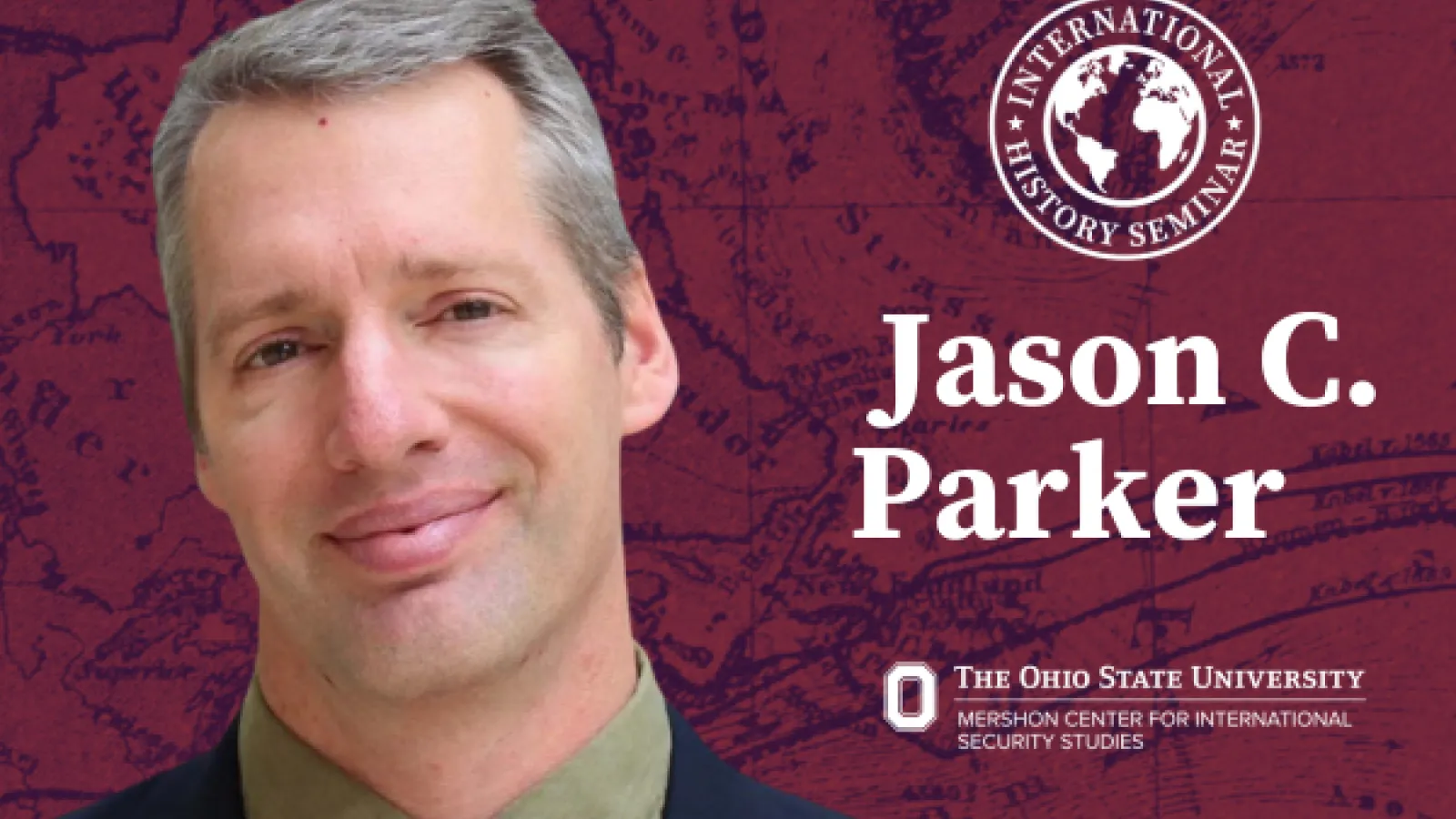
Coffee will be served at 3:30pm. The event will start at 4:00pm.
Title
The Last Resort? Populations, Partitions, and the Postwar Rise of the Federal Idea in the Decolonization Era
Abstract
The dust of World War II settled on a world map in great flux. After Versailles, actors in global North and South alike had been revisiting inherited imperial borders to imagine a “United States of Europe,” pan-African, -Arab, and similar “nations,” and the application of Wilsonian “national self-determination” to resolve both the “Minorities Question” and territorial claims large and small. But the interwar and immediate postwar periods left most of these claims unsatisifed. The precedent of the 1923 Lausanne Treaty had brought forth two solutions: large-scale population transfers and Gordian-knot partition plans. These, in tandem, exacted a horrific humanitarian cost. In postwar Europe, the forced relocation of peoples per the Potsdam borders took over a million lives. Partitions in the Middle East and South Asia fared no better, the latter doubling the human toll of the European transfers. Mixing desperation, idealism, and practicality, the British Empire with American support began experimenting with a last-resort notion: federation. Previously floated in all of the above cases, the model arose as a panacea for metropole and colony alike. Given the failure of transfers and partitions, it triumphed partly by default. However, its earliest experiments, in the Federations of the West Indies and Malaya, showed enough promise to launch the midcentury “federal moment” in postwar decolonization.
Speaker
Jason C. Parker is a Professor of History at Texas A&M University. He specializes in the history of US-“Third World” relations, studying both the formal and informal “diplomacy” embedded in the interactions of empires, nations, and peoples. His research examines the ways in which state- and non-state actors in the United States engaged with their counterparts abroad within a complicated matrix of strategy, security, decolonization, and race during the long “American Century.” His first book, Brother’s Keeper: The United States, Race, and Empire in the British Caribbean, 1937-1962 (Oxford, 2008), looked at the actions of US-based actors- the American government, African Americans, and Caribbean immigrants– in the push for independence in the British West Indies. His second book, Hearts, Minds, Voices: U.S. Cold War Public Diplomacy and the Formation of the Third World (Oxford, 2016), examined U.S. efforts at "winning hearts and minds" in the global-South during the first half of the Cold War.
Parker received Ph.D. in History from the University of Florida. He was awarded a B.A. in English and a M.S. in History from Vanderbilt University.
About the International History Seminar
If you are interested in attending this semester’s events and joining the International History Seminar, please send an email confirming your interest to the Hayes Chair Graduate Research Associate, Ian Gammon, at hayeschairgra@osu.edu, and you will be included on the mailing list going forward. Materials will only be pre-circulated to people on the mailing list.