Mershon Center Associate Director Teri Murphy witnesses the dignified return of Father Torres in Bogotá

Dr. Teri Murphy, Associate Director for Peacebuilding Research at the Mershon Center for International Security Studies (Mershon Center), and Dr. Derek Congram, an international forensic expert and Mershon Research Associate, were among the specialists invited to participate in the dignified return of Father Camilo Torres in Bogotá, Colombia on February 15, 2026. Their invitation followed the recent formalization of an institutional alliance between the Mershon Center and Colombia’s Unidad de Búsqueda de Personas Desaparecidas (UBPD).
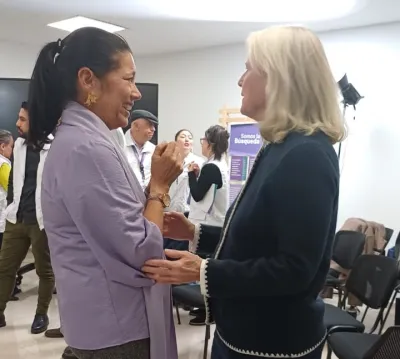
“Derek and I were honored by the invitation to participate in the dignified return of Father Torres,” said Murphy. “The identification process was thorough and rigorous, and the ceremony itself was respectful, moving, and deeply meaningful.”
Nearly sixty years after he was disappeared by the Colombian army - killed and secretly buried - the remains of Father Camilo Torres Restrepo were located, exhumed, and definitively identified by Colombia’s Unidad de Búsqueda de Personas Desaparecidas (UBPD), the national Search Unit for the Disappeared, in January 2026. A priest and sociologist, whose death in 1966 transformed him into one of the most emblematic figures of Colombia’s armed conflict, Torres was returned in a dignified ceremony in Bogotá, a milestone that brings closure to a disappearance that has remained unresolved for decades.
“The search for, recovery of, and return of Father Camilo Torres Restrepo,” said Luz Janeth Forero, director of the UBPD, “allows us to honor and dignify the more than 135,000 people disappeared in our country, as well as the resilience of those who search for them - like Isabel Restrepo, Father Camilo’s mother.
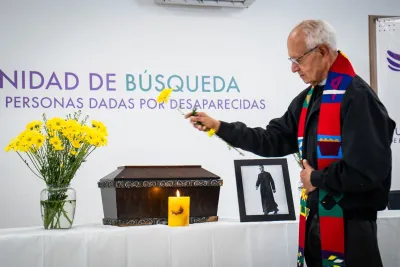
Father Torres occupies a complex and contested place in Colombia’s history. A priest, professor, and co-founder of sociology at the National University, he dedicated his ministry and scholarship to marginalized communities. In the final months of his life, and after threats and attempts on his life, he joined the ELN (National Liberation Army), a Marxist-Leninist guerrilla movement committed to radical social change. Convinced that structural injustice required revolutionary transformation, he chose armed struggle - a decision that continues to shape debate about his legacy. He believed that “the revolutionary struggle is a priestly and Christian struggle,” a conviction rooted in both analytical reasoning and moral imperative. Father Torres was killed by the Colombian Army on February 15, 1966, during an armed confrontation. His body was hidden by the armed forces, deepening the silence that surrounded both his death and his political legacy.
Murphy and Congram both observed and advised in the days leading up to the dignified return ceremony, participating in validation sessions alongside Father Giraldo, who requested the official institutional search for Torres; Colombian academics; civic leaders; and an interdisciplinary forensic team. The findings of anthropologists, odontologists, medical doctors, geneticists, and other specialists who had carefully documented the exhumation, recovery, and identification process were presented and reviewed. See Congram's interview about Camilo Torres' recovery.
“The affirmation that this is the body of Father Camilo Torres is the result of evaluating and reconciling all contextual, historical, and forensic information,” said Forero. “Through an unprecedented triangulation of sources - oral and written, public and confidential - we reached this conclusion.”
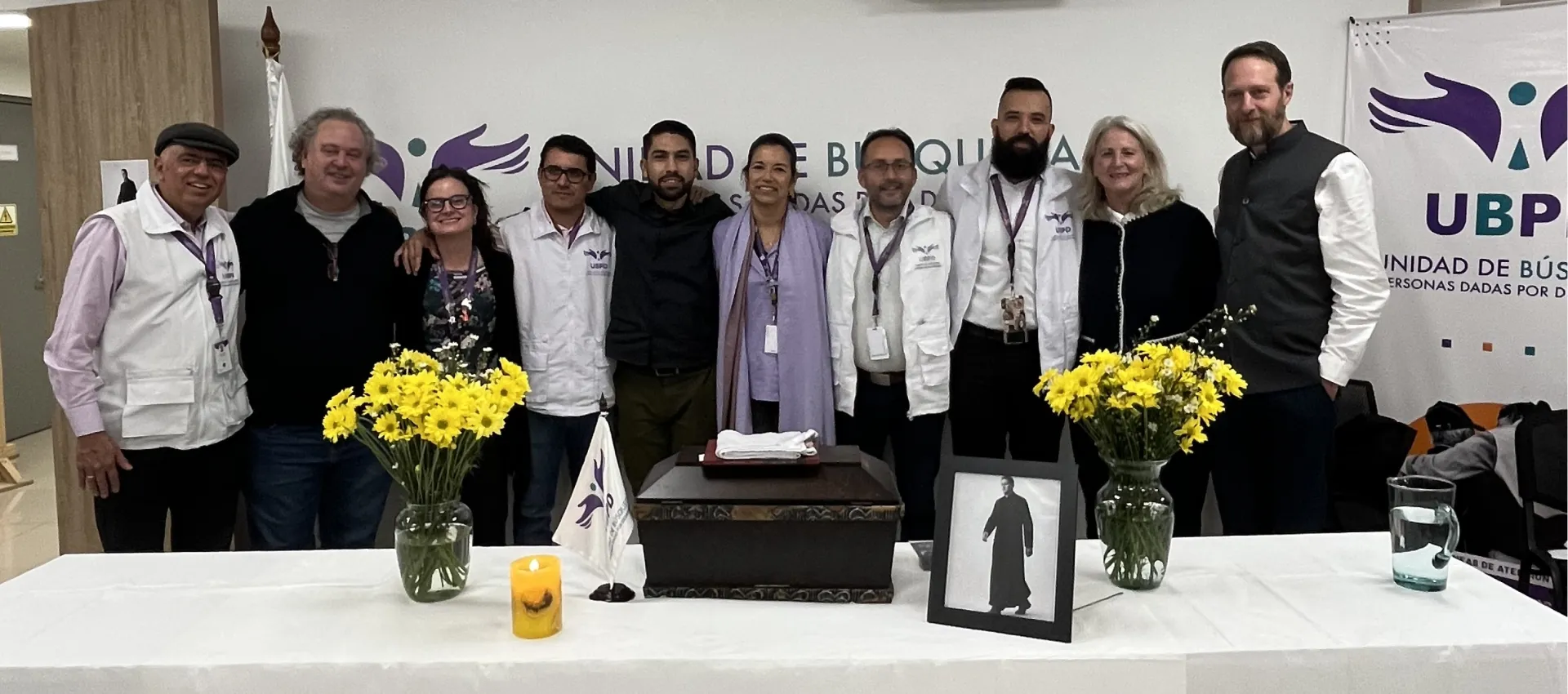
On the sixtieth anniversary of Camilo Torres’ death, Father Giraldo received the Torres’ coffin in a dignified return ceremony at UBPD headquarters in Bogotá, carried out under strict protocols of confidentiality and respect. He chose to place Torres’ remains in the Cristo Maestro chapel at National University, honoring Torres’ memory in a space long associated with his intellectual and spiritual life.
For six decades, Father Torres lay in darkness - his fate obscured by silence, rumor, and the violence of war. The recovery of his remains brings that darkness into the light. More than resolving one of Colombia’s most enduring historical disappearances, it affirms the capacity of institutional search mechanisms, forensic science, and sustained civic commitment to confront painful truths. Once mythologized in absence, Father Torres now returns to history as a documented and identified presence, reminding the nation of the human cost of conflict and the enduring possibility of dignity, memory, and reconciliation.