Mershon Center affiliates offer expert opinions and analysis of the US-Iran War
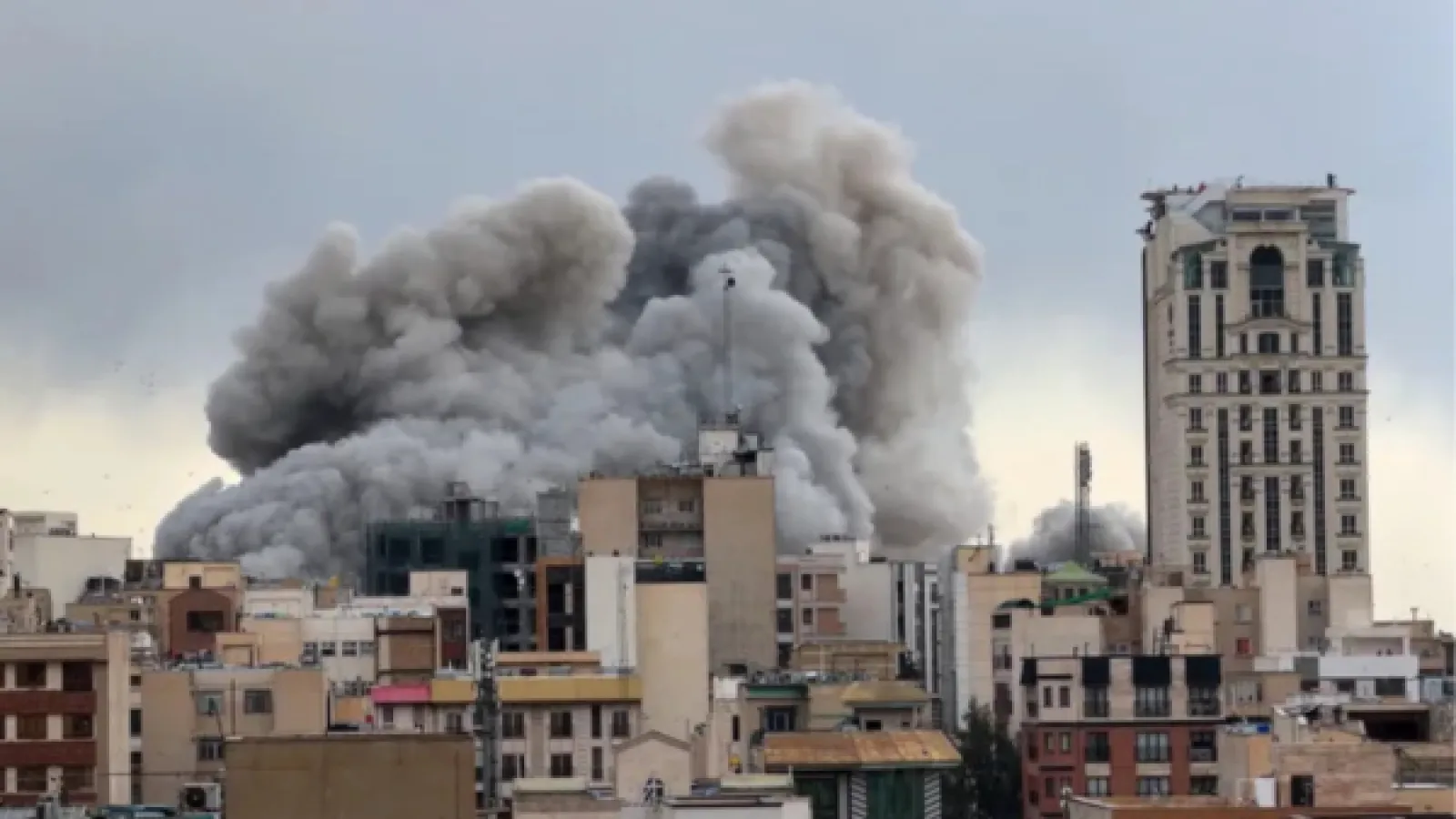
As the conflict between the United States and Iran has unfolded over the past weeks, Mershon Center affiliates across multiple disciplines have been called on to give expert opinions and analysis. For news outlets across the country and across the world, Mershon Center experts have been helping us understand the impact, strategy, law, cost and more of the ongoing U.S.-Iran war. Below is a sampling of media highlights featuring Mershon Center affiliate experts.
Benjamin McKean, associate professor of political science, talked to NBC4 about the economic impact of the war on Iran. In connection with the rising price of food, energy, and gas, McKean told NBC “Obviously, oil is used in a lot of different products, but of course it’s very importantly used in energy. And so, we’ll see rising demand for other sources of energy. We’ll see other energy prices go up as well, and we’ll see effects in places we might not expect.”
Dakota Rudesill, professor of law, appeared on the NucleCast podcast to discuss the legal boundaries that govern the use of military force, with a particular focus on the U.S. and Iran. Drawing on constitutional law, international law, and decades of historical precedent, Rudesill unpacked who truly holds the authority to take the nation to war—and under what conditions. He offered a clear, rigorous look at how law, power, and nuclear‑era decision‑making intersect in moments of crisis. Rudesill also talked with WAMU NPR about the Iran War, what Trump owes Congress, the U.S. Constitution, and secret law and to WOSU All Sides with Amy Juravich about how Americans reactions to the Iran war compare to past conflicts.
Christopher McKnight Nichols, Mershon Center Hayes Chair in National Security, was featured in Greece’s leading newspaper, Kathimerini, offering expert analysis on recent U.S. Middle East policy and said, among other things, “[s]ome U.S. diplomatic efforts in the region have proven effective in recent years, particularly in multilateral cooperation. The Joint Comprehensive Plan of Action (JCPOA), the so-called “Iran nuclear deal”, is a prime example. It was a 2015 agreement between Iran and the US, UK, France, Germany, Russia, China, EU and aimed to minimize the risk of a nuclear-armed Iran. However, the first Trump administration denounced this agreement, claiming it would negotiate a better one, which it never did – and instead, turned again and again to military force rather than more productive diplomatic action. We are seeing the very clear effects today." He also spoke to The Post about the U.S.-Iran war, the Strait of Hormuz, and achieving U.S. aims.
Peter Mansoor, Colonel, U.S. Army (Retired), and former Executive Officer to Gen. David Petraeus, the Commander of U.S. Forces during the Iraq War, is the Mershon Center General Raymond E. Mason Jr. Chair of Military History and a frequent media commentator on national security affairs. Mansoor was featured in a Wall Street Journal story entitled “Is the U.S. Repeating the Mistakes That Led to Forever Wars?” that speculated that while the Iran conflict is likely to be far shorter than the war in Iraq, the U.S. is running into some of the same pitfalls. He also talked to the AP about presidential war powers, shared his analysis of a U.S. military plane crash with MSN, and talked to CNN's Erin Burnett about the war. Mansoor discussed the hard power options open to Trump on The Telegraph podcast, how opening Strait of Hormuz will probably require US boots on the ground with Al Jazeera and the risk that the Iran War will become America's next Middle East quagmire with the Sri Lanka Guardian. For a Christian Science Monitor story entitled “In Iran, a U.S. win will take more than just claiming victory,” he opined “[w]e’re winning tactically and operationally, but strategically, I’m not so sure.”