Nichols gives keynote at OSURA
Below is a story reprinted from OSURA News.
At 8 a.m. Wednesday, September 23 the OSURA 29th Annual Fall Conference opened. With the theme HONORING THE PAST, ENGAGING THE FUTURE the attendees were treated to a fabulous day of excellent speakers, good food and good friends.
By Rai Goerler
Keynote Address
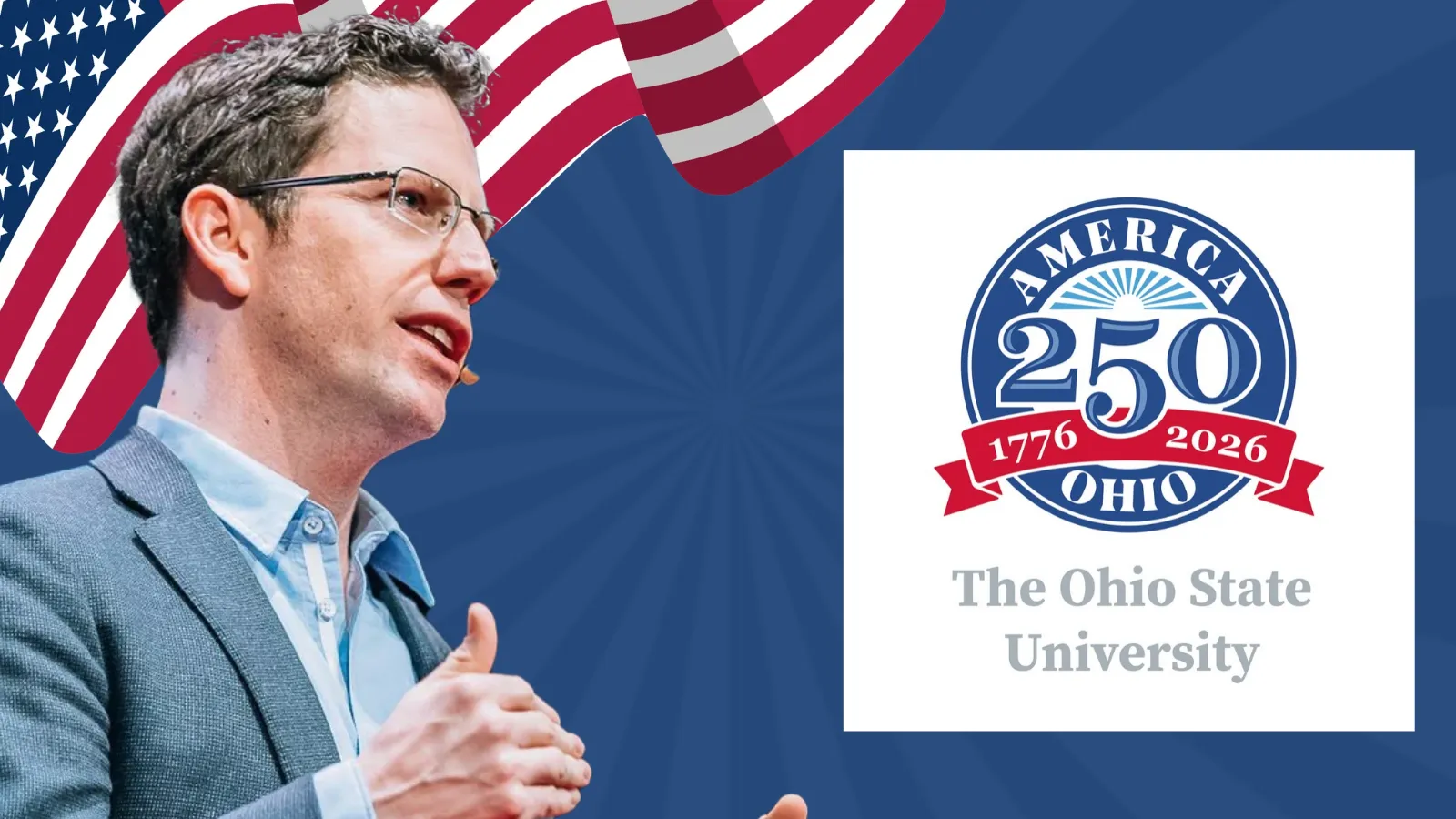
Historian Christopher McKnight Nichols opened the 29th Fall Conference of OSURA with the keynote address: “The Nation, the Founding, and The Ohio State University.” As faculty chair of OSU’s America at 250 Initiative, Professor Nichols talked about the celebrations in Ohio, the role of Ohio in the War of Independence, and the importance of the state in the shaping of the republic.
No Revolutionary War battles occurred in Ohio, but conflict in the Ohio Valley helped spark the French and Indian War and later the struggle for independence. George Washington, as a major in the Virginia militia, confronted French forces there in 1754 and 1755. After the war ended in 1763, Britain attempted to bar settlement west of the Appalachians, fueling colonial opposition. In 1774, militia officers at Fort Gower in the Hocking Valley resolved “that we will exert every Power within us for the Defense of American Liberty, and for the Support of her just Rights and Privileges.” Their declaration preceded Thomas Paine’s Common Sense by two years and was an early expression of American identity.
After the war ended in 1783, the Ohio Valley opened to settlers, and Congress created a model for the young nation’s westward expansion. The Ordinance of 1787 authorized new states in the Old Northwest, including Ohio, and guaranteed residents the rights and privileges of citizenship. It also prohibited slavery and promoted education in the territories. This ordinance set the pattern for extending American democracy westward.
Professor Nichols commented that our understanding of the Declaration of Independence and the War of Independence has evolved and become more inclusive. African Americans served in the militias of New England. So did Native Americans who fought on both sides. Jewish Americans supported independence, including Haym Salomon, who loaned money for the war and died in poverty. Even our knowledge of the writing of the Declaration of Independence has grown; an early draft by Thomas Jefferson cited slavery as an evil inflicted by Great Britain.
Finally, Professor Nichols observed that while the national celebration of the 250th Anniversary has had controversy, activities in Ohio have been bipartisan and educational. Hundreds of events, including conferences, exhibits, and presentations have happened (or will happen) in each of the 88 counties of Ohio. See America250 Ohio and American250 Ohio State. The Declaration of Independence continues to be an inspiration, both here and abroad.