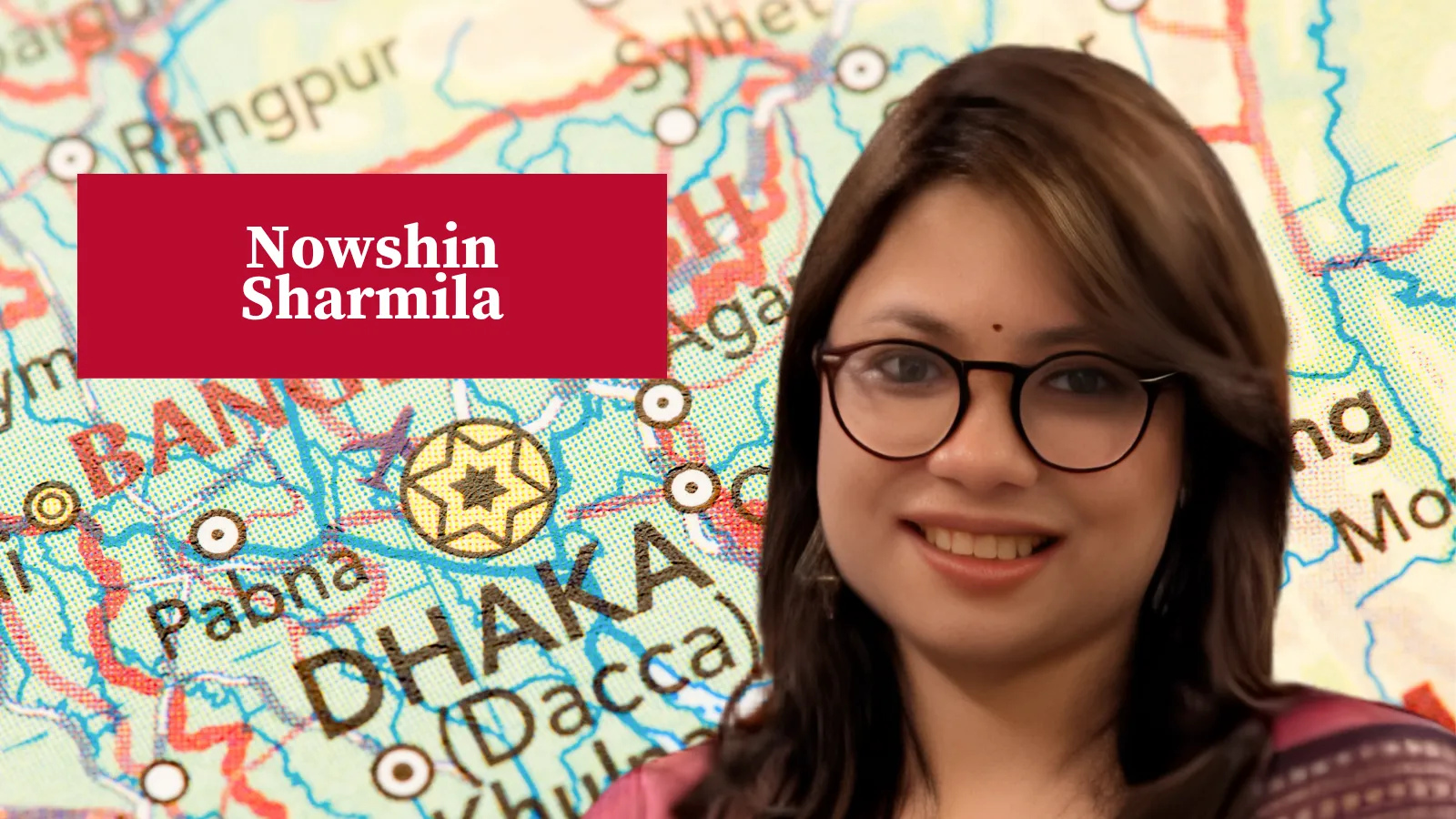
Nowshin Sharmila explores ground-level solutions in Bangladesh
Nowshin Sharmila’s Mershon-funded research project is a steppingstone for creating new models for ground-level problem-solving. A graduate student in Women’s, Gender, and Sexuality Studies who just finished her master’s degree, Sharmila examined the nature of the informal economy of bribes and extortion in illegal sex work economies in Bangladesh in her research project "Invisible Economies: Informal Sex Work in Dhaka, Bangladesh." In addition, she examined how the sex work governance structure in Bangladesh produces and sustains an invisible economy of routinized bribes, sexualized extortion, and carceral discipline and how within this economy, police and other informal actors as well as the state simultaneously profit from and condemn the very livelihood they refuse to protect legally.
“This project grew out of a personal commitment that long preceded my academic training, said Sharmila. “I began working with sex workers’ communities around 5 years ago, as a volunteer during my undergraduate studies, and that experience gave me a sense of the gap between how sex work is represented in law and policy, where the research is mostly focused, and how it is actually lived and what the challenges are that sex workers are actually facing.”
In Dhaka, Sharmila worked with a registered non-profit organization for sex workers and used a participant-as-observer method to engage in informal conversations with sex workers and organization staff about their lived experiences of bribes and extortion. The research project centered the perspectives of those most directly impacted street-based, residence-based sex workers and used their embodied knowledge for building the epistemic knowledge base.
“My research connects to Mershon’s focus on complex security challenges by examining how international HIV funding cuts, global anti-trafficking policies, and colonial criminal laws contribute to and promote carceral forms of governance, thus producing everyday insecurity for the majority of sex workers in Bangladesh," said Sharmila.
Research revealed multiple interrelated dynamics, such as bribery and extortion, operate not as exceptional disruptions but as routinized costs that sex workers systematically absorb into the everyday organization of their labor. The extortion also extends beyond monetary transactions, as police and other informal actors routinely demand sexual access from sex workers as a structural condition of continued tolerance. When informal bribe negotiations fail, authorities subject sex workers to a predictable carceral procedure that levies a formal fine and compels a public admission of moral wrongdoing. Following this process, women invariably return to the same occupation under conditions of heightened economic precarity.
“This project is important for several interconnected reasons. Most immediately, I think it addresses a significant empirical gap,” said Sharmila. “Despite extensive research on sex work in Bangladesh from a public health perspective, there haven’t been enough empirical studies focusing on the nature of the informal economy of bribes, protection payments, and sexualized extortion that structures the daily life and survival of non-authorized sex workers. This was an experimental research project to understand the first systematic, ground-level account of the nature of that invisible economy for more than 200,000 non-authorized sex workers in Bangladesh.”
Sharmila’s research asks big questions about who truly benefits from this informal economy of bribery and extortion, a question that existing policy discussions have largely overlooked. It explores questions about whether sustaining the quasi-legality of sex workers and subsequent production of the category of non-authorized sex workers is more profitable for the state than decriminalization and legalization would be. The project advocates concrete reforms, including full decriminalization, direct funding of sex worker-led legal and health initiatives, and independent mechanisms for reporting police violence. Quasi-legal sex work is not limited to Bangladesh, so ultimately, Sharmila’s research opens an avenue to understand the political economy of sex work both in Bangladesh and around the world.