What Does Peace Mean When Peace Itself Is Contested?
There was something unsettling about gathering peacebuilders in Northern Ireland last week to ask what peace means today - and watching the past return almost literally to the doorstep.
We were meeting at the Corrymeela Peace Centre, on Northern Ireland’s north coast, when the long-running Drumcree parade dispute erupted again. For nearly three decades, the Orange Order had been prohibited from marching along the predominantly nationalist Garvaghy Road in Portadown, following years of confrontation and violence at Drumcree in the 1990s. In 1998, the standoff became one of the most dangerous flashpoints of the peace process; that summer, three young Catholic boys were killed in a sectarian attack amid the surrounding tensions.
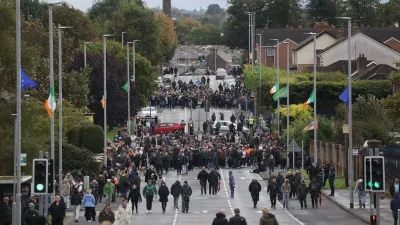
This year, a decision by the Parades Commission - and a subsequent court ruling - opened the way for a limited Orange Order parade to proceed for the first time in 28 years. Residents blocked the road. Police formed barriers. People gathered through the night. For several days, Northern Ireland found itself confronting an old question in a new moment: whose rights, whose safety, whose law, and whose understanding of justice defines peace?
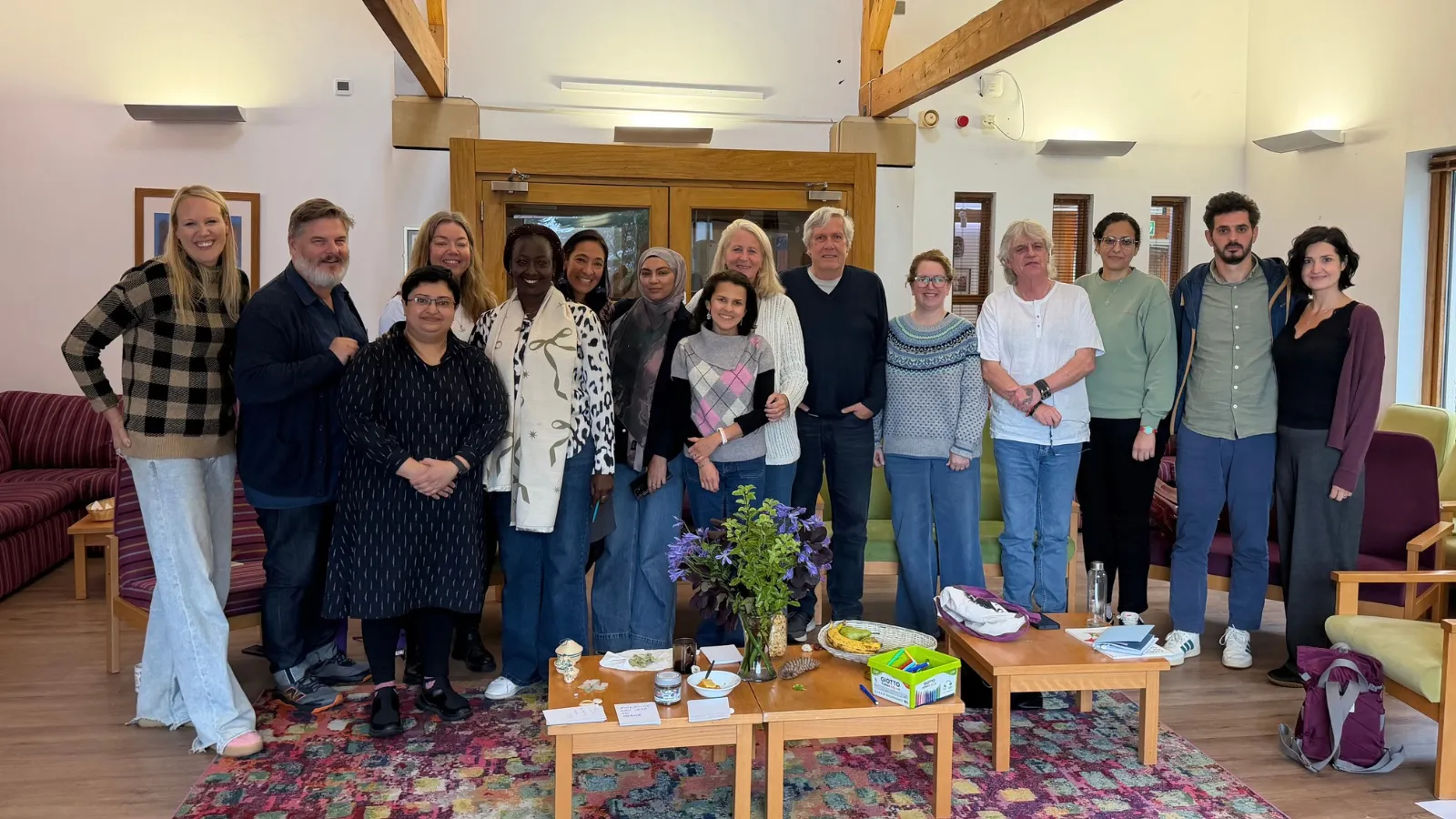
Against that backdrop, seventeen peace experts working in Colombia, Guatemala, Spain, Sweden, Myanmar, Ukraine, Georgia, Rwanda, Mozambique, Palestine, Northern Ireland, the United States and India gathered at Corrymeela for Reclaiming Peace in an Era of Populism and Polarization, a collaboration between The Ohio State University’s Mershon Center for International Security Studies and the Corrymeela Community, co-sponsored by Ireland’s Department of Foreign Affairs.
They came from universities, government and community organizations, faith groups, international institutions, and local NGOs. Rather than beginning with theories about peace, they began with experience: moments when the meaning of peace itself had been contested, appropriated or redefined - and what those moments demanded of them.
A striking theme emerged: the difficulty of holding complexity.
Across very different settings, participants described a growing pressure to reduce complicated realities to binaries - to choose a side, identify an enemy, find certainty. Fear and insecurity make that temptation stronger. Political leaders understand this. So do peacebuilders.
Participants spoke about anger and paralysis, but also about exhaustion and hypervigilance: the experience of measuring one’s words, wondering who can be trusted, and feeling that the space for principled action is narrowing.
And yet, when asked to describe peace in their contexts, participants did not reach for a single definition. They called it fragile, persistent, tense, broken, violent, frustrated, emergent, frightened, and uneasy.
Perhaps that is part of what we know and continue to learn. Peace is not a settled condition, nor is it linear. Sometimes it is the capacity to remain present in uncertainty - to hold competing truths without immediately forcing them into opposing camps, to protect human dignity when institutions falter, and to keep creating spaces where people can still listen, question and act together.
At Corrymeela, even as Drumcree reminded us how quickly old wounds can reopen, seventeen people from very different worlds and perspectives kept talking.
That, too, is a practice of peace.